
Ross Sea Region
Antarctica from New Zealand: Explore the Remote Ross Sea
The Ross Sea Region is one of the most remote and historically significant areas of Antarctica. Far less frequently visited than the Antarctic Peninsula, this vast region of ice, mountains and ocean offers a rare opportunity to travel deep into the Antarctic wilderness.
For travellers looking for Antarctica from New Zealand, a Ross Sea expedition is one of the most extraordinary ways to experience the White Continent. Voyages from New Zealand travel across the Southern Ocean to the Ross Sea, following routes shaped by the explorers of the Heroic Age of Antarctic Exploration.
Some longer expeditions also connect Australia and New Zealand with Antarctica, offering an extended journey through the Southern Ocean before reaching the Ross Sea and East Antarctica.
A Ross Sea expedition combines extraordinary polar landscapes and wildlife with historic exploration sites, remote islands and some of the least-visited coastlines in Antarctica. For travellers seeking a deeper and more remote Antarctic experience, it offers the opportunity to venture much further south than the classic Antarctic Peninsula routes.
Where is the Ross Sea Region?
The Ross Sea lies in the Southern Ocean between Victoria Land and Marie Byrd Land in East Antarctica. It is bordered by the Ross Ice Shelf and includes some of the most remote and isolated coastline on the continent.
The region is most commonly reached by expedition ship from New Zealand, making it an important destination for travellers searching for Antarctica cruises from New Zealand. Voyages may depart from New Zealand ports such as Dunedin, depending on the itinerary.
Longer Southern Ocean expeditions can also connect Australia, New Zealand and Antarctica, providing an extended journey through some of the world's most remote waters before reaching the Ross Sea region.
Because of its remote location and challenging conditions, Ross Sea expeditions are generally considerably longer than cruises to the Antarctic Peninsula.
A Land of Exploration History
The Ross Sea Region played a central role in the history of Antarctic exploration. Many of the expeditions that ventured into the unknown Antarctic interior during the early 20th century used this region as their base.
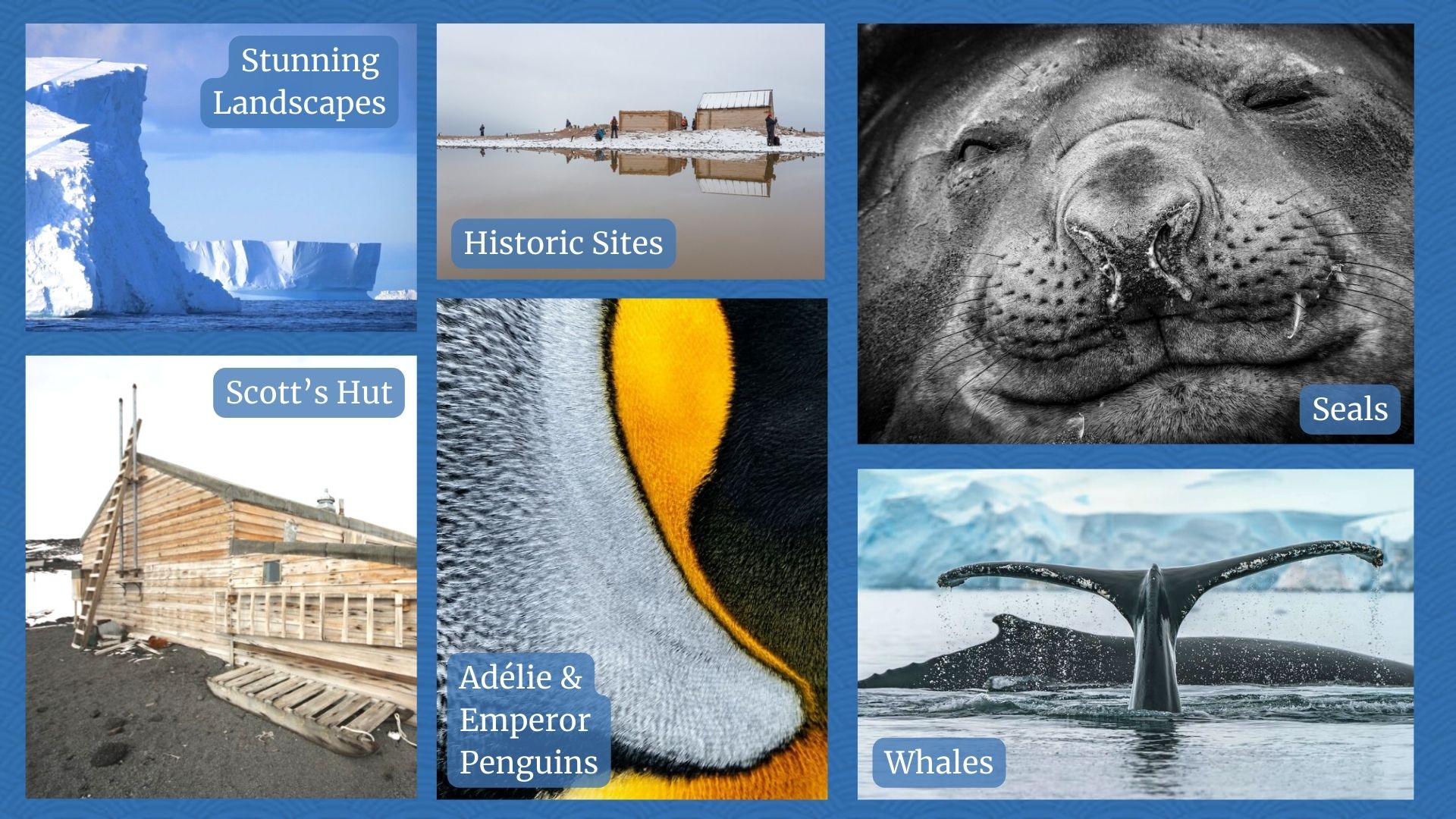
Historic expedition huts remain remarkably preserved in the Antarctic environment. Depending on the itinerary and conditions, travellers may visit sites associated with explorers including:
- Ernest Shackleton – Shackleton's hut at Cape Royds was established during the Nimrod Expedition of 1907–09.
- Robert Falcon Scott – Scott's huts at Cape Evans and Hut Point are important reminders of the British Antarctic Expeditions.
- Carsten Borchgrevink – The hut at Cape Adare dates from the Southern Cross Expedition of 1898–1900, the first expedition to overwinter on the Antarctic continent.
- Douglas Mawson – Mawson's Antarctic expeditions also left an important historical legacy in the wider East Antarctic region.
Visiting these remote sites provides a powerful connection to the explorers who endured extraordinary conditions while attempting to reach the Antarctic interior.
Wildlife of the Ross Sea
Despite its harsh environment, the Ross Sea supports a rich Antarctic ecosystem during the short summer season.
Wildlife encounters can include:
- Adélie Penguins – Large colonies can be found along parts of the Ross Sea coastline.
- Emperor Penguins – The Ross Sea is one of the regions where these remarkable penguins may be encountered.
- Whales – Several whale species feed in the productive waters during the Antarctic summer.
- Seals – Weddell, crabeater and other Antarctic seal species inhabit the region.
- South Polar Skuas – These powerful seabirds are commonly associated with Antarctic coastal environments.
- Snow Petrels and Southern Fulmars – Characteristic Antarctic seabirds that can be seen around the coastline and at sea.
The abundance and location of wildlife vary with the season, sea ice and local conditions, making every expedition different.
The Ross Ice Shelf
The Ross Ice Shelf is one of the defining features of the region and the largest floating ice shelf in Antarctica. Its immense scale is difficult to comprehend, stretching for hundreds of kilometres along the southern Ross Sea.
The ice shelf forms part of the route towards the Antarctic interior and has been a landmark for generations of polar explorers. Its towering ice cliffs and vast expanses of floating ice create some of the most dramatic scenery encountered on an Antarctic expedition.
The Ross Sea by Small Ship
Small expedition ships are particularly well suited to exploring the Ross Sea. Their size and expedition capabilities allow access to remote areas and provide opportunities for Zodiac excursions and shore landings when conditions permit.
Ross Sea itineraries are deliberately flexible. Weather, sea ice and wind can influence where and when a ship can land, and expedition teams may adjust the route to make the most of conditions and wildlife encounters.
The unpredictability is an important part of the experience. A Ross Sea expedition is not simply a cruise through a set itinerary, but a genuine journey into one of the world's most remote environments.
When to Visit the Ross Sea
Ross Sea expeditions operate during the Antarctic summer, when sea ice conditions and daylight make exploration possible.
The main season is generally January and February, with some voyages extending into the surrounding months depending on the itinerary.
The summer months bring longer daylight hours and increased wildlife activity. Penguins are feeding and raising chicks, whales return to productive Antarctic waters, and expedition ships can navigate areas that remain inaccessible during the long Antarctic winter.
How Long Do Ross Sea Expeditions Take?
Ross Sea cruises are among the longest Antarctic expedition voyages. Most itineraries take approximately 22 to 34 days, depending on the route and destinations included.
Voyages departing from New Zealand generally require around one month, reflecting the vast distances involved. Some itineraries combine the Ross Sea with the Subantarctic Islands, while longer routes may continue towards the Antarctic Peninsula or South America.
For travellers considering Antarctica from Australia or New Zealand, these longer Southern Ocean voyages provide an opportunity to combine the journey south with an in-depth exploration of the Ross Sea and East Antarctica.
Why Choose a Ross Sea Expedition?
The Ross Sea is ideal for travellers who want to go beyond the classic Antarctic experience. Rather than focusing solely on penguins and icebergs, a Ross Sea expedition combines remote wilderness, Antarctic wildlife, exploration history and some of the most isolated landscapes on Earth.
It is particularly suited to travellers searching for a small-ship Antarctica cruise from New Zealand, or a longer expedition connecting Australia or New Zealand with Antarctica.
A Ross Sea cruise is more than a visit to Antarctica. It is an expedition into one of the world's most remote regions, where vast ice shelves, historic huts, abundant wildlife and the enduring spirit of polar exploration come together.