
Antarctic Peninsula
Explore the White Continent
The Antarctic Peninsula is one of the most accessible and spectacular regions of Antarctica, offering an extraordinary combination of towering icebergs, snow-covered mountains, glaciers and abundant wildlife. For many travellers, a small-ship expedition to the Antarctic Peninsula is the ultimate introduction to Antarctica.
Voyages explore the sheltered waters and islands around the Peninsula, with regular Zodiac excursions and shore landings providing opportunities to experience the landscape and wildlife at close range. Gentoo, Adélie and Chinstrap penguins, seals, whales and abundant seabirds are among the highlights, while dramatic ice formations provide an ever-changing backdrop.
The Antarctic Peninsula is particularly well suited to travellers seeking an immersive expedition experience, with opportunities for wildlife watching, photography, kayaking and other optional activities available on selected voyages.
Where is the Antarctic Peninsula?
The Antarctic Peninsula extends northwards from the Antarctic continent towards the southern tip of South America. Its proximity to South America makes it the most accessible part of Antarctica and the most popular region for Antarctic cruises.
Most voyages depart from Ushuaia, Argentina, travelling south across the Drake Passage before reaching the Antarctic Peninsula. Fly-cruise itineraries are also available, allowing travellers to fly between Punta Arenas in Chile and King George Island in Antarctica, avoiding the Drake Passage crossing.
What can you see?
The Antarctic Peninsula is renowned for its spectacular scenery and diverse wildlife. Conditions vary throughout the season, but typical highlights include:
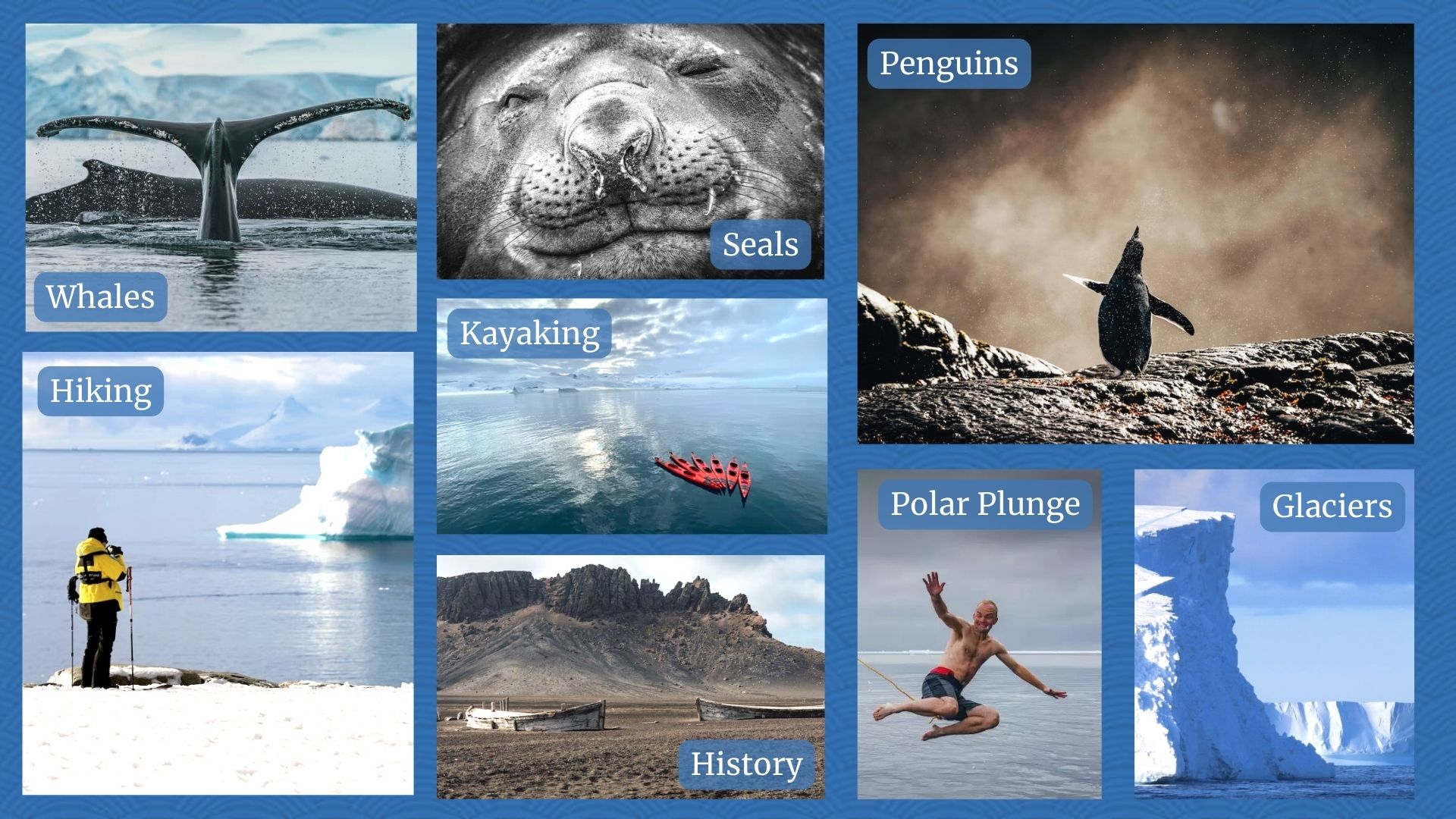
- Penguins: Gentoo, Adélie and Chinstrap penguins are commonly encountered, often in large colonies.
- Whales: Humpback, minke and other whale species can be seen in the waters around the Peninsula, particularly later in the season.
- Seals: Weddell, Antarctic fur and crabeater seals are among the species that may be encountered.
- Icebergs: Vast tabular icebergs and intricately sculpted pieces of sea ice create some of Antarctica's most memorable scenery.
- Glaciers: Massive glaciers descend from the mountains towards the sea, with opportunities to see ice calving into the water.
- Seabirds: Albatrosses, petrels, skuas and other Antarctic seabirds accompany many voyages.
Wildlife encounters are never guaranteed, as conditions and animal movements vary, but the Antarctic Peninsula offers exceptional opportunities for close encounters with Antarctic wildlife.
Activities & Experiences
An Antarctic Peninsula expedition is about much more than viewing the scenery from the ship. Small expedition vessels can reach sheltered bays and remote landing sites that allow travellers to experience the Antarctic environment at close range.
Zodiac excursions are a fundamental part of most Antarctic cruises, taking passengers from the ship to beaches, rocky shores and areas surrounded by ice.
Shore landings provide opportunities to walk among penguin colonies, explore the landscape and experience the scale and silence of Antarctica.
Kayaking is available on selected departures, offering a quieter perspective from the water as you paddle among icebergs and along the Antarctic coastline.
Photography is a major attraction, with constantly changing light, dramatic landscapes and abundant wildlife providing exceptional opportunities for photographers of all levels.
Some expeditions may also offer activities such as camping, snowshoeing or snorkelling, depending on the vessel, itinerary and conditions.
When to Visit the Antarctic Peninsula
The Antarctic cruise season generally runs from October to March, during the Antarctic summer. Each part of the season offers a different perspective on the Peninsula.
October to November brings pristine snow-covered landscapes, sea ice and the early stages of the penguin breeding season. This period can be particularly appealing to photographers looking for dramatic winter-like scenery.
December to January brings longer days and increased wildlife activity. Penguin chicks begin to hatch, while humpback whales return to Antarctic waters.
February to March is an excellent period for whale watching, with increasing numbers of whales around the Peninsula. Sea ice has generally receded further, allowing ships to explore more areas, and the changing light can create excellent conditions for photography.
How Long Do Antarctic Peninsula Cruises Take?
Antarctic Peninsula cruises vary considerably in length depending on the itinerary and whether the voyage includes a Drake Passage crossing or flights to Antarctica.
A typical Antarctic Peninsula cruise takes around 10 to 12 days, including the return Drake Passage crossing from Ushuaia. Longer voyages may combine the Antarctic Peninsula with destinations such as South Georgia, the Falkland Islands or areas further south.
For travellers with limited time, Antarctica fly-cruise itineraries can reduce the overall journey by flying between Chile and King George Island rather than crossing the Drake Passage by ship. These expeditions can provide a shorter way to experience Antarctica while still allowing time aboard an expedition vessel.
Travelling to Antarctica from South America
Ushuaia in southern Argentina is the principal departure point for Antarctic Peninsula cruises. The city sits on the Beagle Channel and is a natural starting point for voyages south towards Antarctica.
Traditional itineraries cross the Drake Passage, the stretch of ocean between South America and the Antarctic Peninsula. The crossing is an important part of the expedition experience, with opportunities to observe seabirds and marine life along the way.
Fly-cruise itineraries offer an alternative. Travellers can fly from Punta Arenas, Chile, to King George Island before joining their expedition ship in Antarctica, avoiding the Drake Passage crossing in both directions.
The Antarctic Peninsula by Small Ship
Small-ship expedition cruising allows travellers to explore the Antarctic Peninsula beyond the main routes. Expedition vessels use Zodiacs to reach remote shorelines and sheltered bays, while expert expedition teams provide insights into the region's wildlife, geology, history and environment.
Because Antarctica is a remote and highly variable environment, itineraries are flexible. The expedition team may adapt the daily programme according to weather, sea ice, wildlife activity and local conditions. This flexibility is an integral part of the Antarctic expedition experience.
An Antarctic Peninsula cruise combines the thrill of exploration with the opportunity to experience one of the world's most extraordinary wilderness regions — from vast icebergs and towering glaciers to penguin colonies, whales and pristine polar landscapes.